Every link building budget eventually runs into the same fork in the road: niche edits or guest posts. Most agencies answer this question with whichever service they happen to sell more of, not with what actually moves a client’s rankings. That’s a problem, because the two tactics behave completely differently once you look past the surface-level “both get you a backlink” pitch.
We run both at scale, across SaaS, e-commerce, and enterprise accounts spending anywhere from $3,000 to $50,000 a month. This guide is written from that operating position, not from a content calendar. It covers the mechanics, the real costs, the failure modes, and the decision logic we actually use internally when a client asks which tactic fits their situation.
Quick Answer: Niche edits insert a contextual link into an already-published, already-indexed page. They’re faster, cheaper per link, and transfer authority almost immediately, but you have zero control over the surrounding content and depend entirely on the publisher maintaining the page. Guest posts are original articles written for a target publication. They cost more, take longer to place, and give you full control over anchor text, context, and narrative, while building a standalone asset that can drive referral traffic and brand exposure long after the SEO value has compounded. Neither replaces the other. Most durable link profiles for competitive keywords use a blend, weighted by how fast you need to move versus how much topical authority you’re trying to build.
Niche Edits vs. Guest Posts: At a Glance
| Factor |
Niche Edits |
Guest Posts |
| Speed to live |
3-10 days |
2-6 weeks |
| Cost per placement |
$150-$450 |
$250-$900+ |
| Editorial control |
Low |
High |
| Anchor text flexibility |
Limited by existing copy |
Full control |
| Authority transfer speed |
Immediate (host page already indexed) |
Gradual (new page has to earn trust) |
| Content ownership |
None |
Partial (byline, often republish rights) |
| Scalability |
High |
Moderate |
| Risk of removal |
Higher (publisher can delete anytime) |
Lower |
| Referral traffic potential |
Low |
Moderate to high |
| Best for |
Fast keyword movement on competitive terms |
Long-term topical authority and brand exposure |
The Decision Framework
Before explaining either tactic in depth, it’s worth establishing how we actually decide between them for a client, because “it depends” is true but useless without a framework behind it.
We ask three questions, in this order:
1. How competitive is the target keyword right now? If a page is sitting at position 8-15 for a commercial keyword and needs a push over established competitors, niche edits usually win. You’re borrowing authority from a page Google already trusts, which shortens the distance between placement and measurable movement.
2. Does the target page have enough content depth to support a ranking push, or does it need topical reinforcement first? If a category or feature page is thin, guest posts pointing at supporting blog content, which then internally links to the money page, often outperform a niche edit pointed directly at a page that isn’t ready to convert new authority into rankings.
3. Is the goal purely rankings, or does the brand also need visibility and referral traffic? A backlink profile isn’t the only asset being built. A guest post placed on a publication your buyers actually read does double duty: SEO value plus a standing piece of content that keeps generating impressions and occasional direct traffic for years.
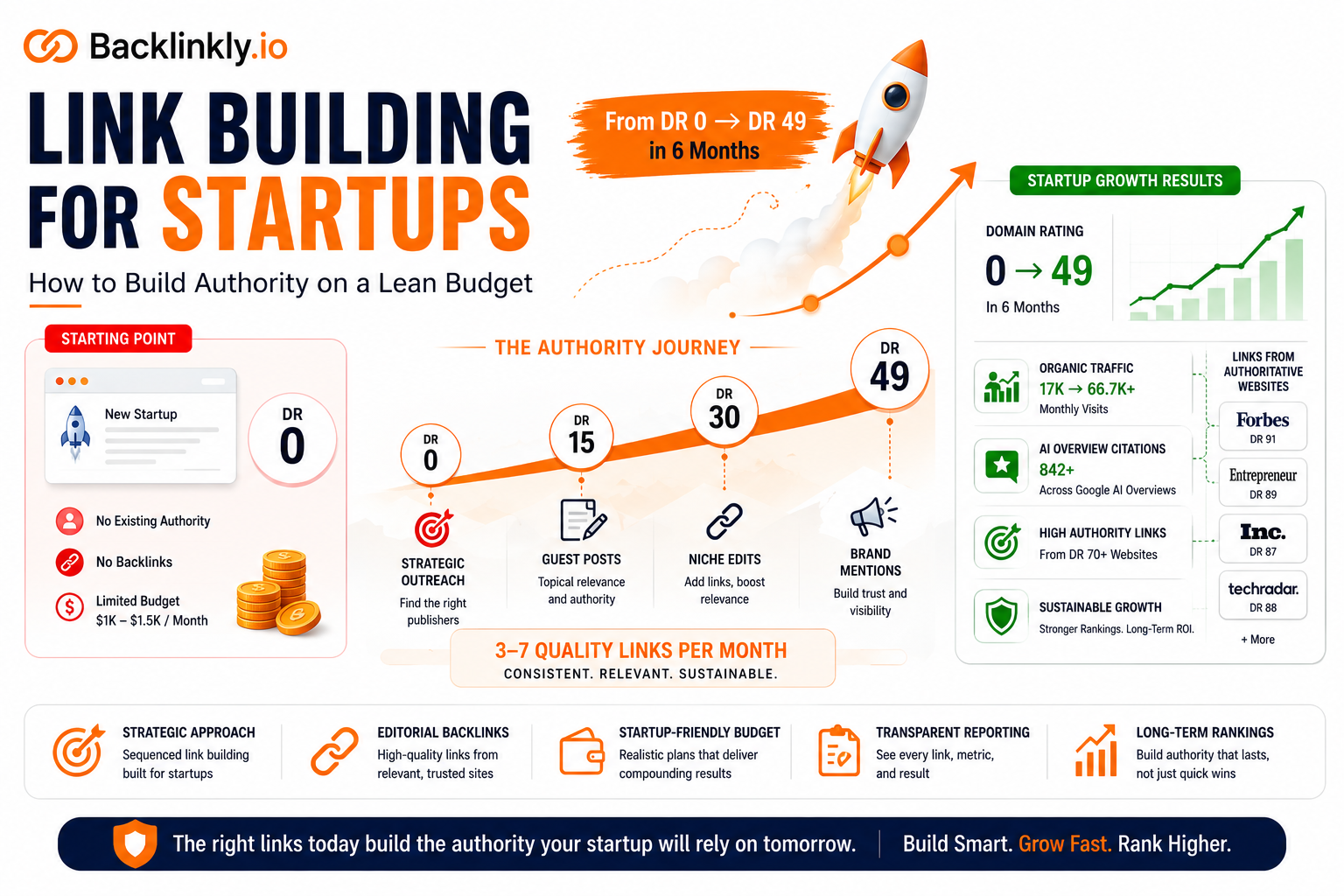
In practice, budgets above roughly $5,000 a month almost always end up blended. Below that, we tend to front-load niche edits for the first 60-90 days to create measurable movement, then introduce guest posts once there’s headroom to invest in longer-term topical authority. Our link building services page walks through how we structure that sequencing by budget tier.
What Are Niche Edits?
A niche edit, also called a curated link or link insertion, is a backlink inserted into a page that’s already live, already indexed, and already earning organic traffic. Instead of commissioning new content, an outreach specialist locates an existing article that’s topically adjacent to the target keyword and negotiates a small addition, usually one to two sentences containing a natural link back to the client’s page.
The mechanism that makes niche edits valuable is inheritance. The host page already carries backlinks of its own, an established crawl pattern, indexed history, and topical relevance signals Google has already validated. A new link dropped into that environment doesn’t have to wait for the page around it to earn trust. It borrows trust that already exists.
How Niche Edits Actually Work
- Prospecting – pulling pages ranking for keyword clusters adjacent to the target term, filtered by organic traffic trend, not just Domain Rating, publish date, and topical match.
- Relevance scoring – manually reviewing each candidate page. A page about remote team communication tools is a strong host for a project management SaaS client; a page about home office coffee makers is not, regardless of its Domain Rating.
- Outreach and negotiation – contacting the publisher directly, never through a marketplace listing, and agreeing on the specific sentence and anchor text before payment or publication.
- Editorial insertion – the publisher edits their own article, which matters for compliance with Google’s guidance on unnatural links.
- Verification and monitoring – checking indexation once live, then monitoring monthly for removal, no-follow tagging, or surrounding content changes.
Pros of Niche Edits
- Live within days rather than weeks, since no new content needs writing or editorial scheduling
- Cheaper per placement with no content production cost built into the price
- Immediate authority inheritance from an already-trusted, already-indexed page
- Easier to scale in volume for campaigns needing broad anchor diversification quickly
- Effective for reinforcing a narrow set of priority commercial keywords
Cons of Niche Edits
- Zero control over surrounding content, tone, or the rest of the page
- Publisher can remove, alter, or nofollow the link at any time without notice
- Placement options limited to content that already exists and is genuinely relevant
- Doesn’t produce a standalone brand asset or drive meaningful referral traffic
- Overused on low-quality PBN-style sites, which has made careless niche edit campaigns a red flag
Expert Tip: Never accept a niche edit placement without seeing the exact sentence and anchor text before it goes live. Agencies that skip this step are the same ones whose clients get burned when a publisher inserts an awkward, obviously paid-for sentence that reads nothing like the surrounding copy.
Real Example
A mid-market SaaS client selling expense management software needed to move a stubborn commercial page stuck at position 11 for “expense management software for startups.” We located a two-year-old, actively updated article on a business finance publication already ranking for adjacent terms and pulling roughly 4,000 monthly organic visits.
The outreach note, paraphrased from our actual template, read along these lines: “We noticed your piece on financial operations for early-stage startups references a few expense tracking approaches. We work with a company offering automated expense management built for distributed teams. Would you be open to adding a sentence referencing this as one option worth evaluating? Happy to suggest wording that fits your existing voice.”
The publisher accepted, inserted a single sentence with a partial-match anchor, and the link went live six days after initial contact. The target page moved from position 11 to position 6 within five weeks.
Cost Analysis
Niche edit pricing depends primarily on the host page’s traffic and topical authority, not just Domain Rating. Expect a realistic range of $150-$450 per placement for genuinely relevant, actively maintained pages. Prices below that range typically signal PBN inventory or expired-domain networks being resold repeatedly, cheap, but carrying real risk of manual action exposure.
Timeline
Niche edits are the fastest white-hat tactic available. Outreach-to-live typically runs 3-10 business days. Ranking impact usually shows within 4-8 weeks, depending on how frequently Google recrawls the host page and how competitive the target term is.
Risk Analysis
The primary risk isn’t Google penalizing the tactic itself; niche edits are a legitimate, widely used method when done editorially. The risk is publisher inventory quality. A page accepting paid insertions from dozens of unrelated industries is a page Google’s spam systems are increasingly good at identifying, and a link from it can carry negative association rather than positive value. We check outbound link profiles on every prospective host page before committing budget, specifically looking for unrelated commercial links stacked into unrelated paragraphs, a strong tell the page functions as a link farm.
The Google Perspective
Google’s spam policies don’t prohibit link insertions as a category. What they prohibit is link schemes designed purely to manipulate ranking with no added value to the reader, a description of poorly executed niche edits, not the tactic itself. A niche edit that adds genuine reader value to an existing article, placed by the publisher with editorial discretion, sits comfortably within Google’s guidance. One that reads as an obvious paid insertion into unrelated content does not, and both outcomes are possible from the same tactic depending entirely on execution quality.
When Niche Edits Work Best
Niche edits perform best when a target page already has strong on-page relevance and content depth but needs an authority push to clear a competitive SERP. They’re also the right tool when a campaign needs to correct anchor text ratios quickly, for example, adding branded or naked-URL anchors to balance a profile that’s grown too partial-match-heavy.
What Are Guest Posts?
A guest post is an original article commissioned specifically for a target publication, written to match that site’s editorial voice and audience, with a contextual link placed naturally inside the body copy. Unlike a niche edit, there’s no existing page to inherit trust from, the article starts from zero and has to earn its own authority over time.
What guest posts trade in exchange for that slower start is control. You decide the topic, the surrounding narrative, and the anchor text, and often get to include more than one contextual link within a single placement, depending on the publication’s guidelines.
How Guest Posts Work
- Publication targeting – identifying sites with genuine audience overlap with the client’s buyers, not just high Domain Rating.
- Pitch and topic alignment – sending a pitch proposing two to three topic angles that fit the publication’s existing content gaps.
- Content production – a subject-matter-informed writer produces an original article, typically 1,200-2,000 words, built around genuine expertise.
- Editorial review – the publication’s editor reviews, requests revisions, and schedules the piece into their calendar.
- Publication and promotion – once live, the piece can be shared through the client’s own channels, adding referral traffic on top of the SEO value.
Pros of Guest Posts
- Full control over anchor text, context, and surrounding narrative
- Produces a standalone asset that continues working as a brand touchpoint indefinitely
- Introduces the brand to a genuinely new audience with referral traffic potential
- Lower removal risk since publishers rarely delete full bylined articles
- Supports multiple contextual links per placement in many cases
Cons of Guest Posts
- Significantly slower, since content production, editorial review, and scheduling add real time
- Higher cost per placement due to professional content creation
- Authority builds gradually since the new page has no existing trust signal
- Requires genuine subject matter expertise to pass editorial review on higher-quality publications
Real Example
An e-commerce client launching a new sustainable packaging product category needed topical relevance and trust for a brand-new category page. We placed a guest article on an industry publication covering retail sustainability trends, framed around the operational realities of switching packaging suppliers, not a thinly disguised advertisement for the client.
The piece included two contextual links: one branded anchor to the homepage, one partial-match anchor to the category page. It took 26 days from pitch to publication, factoring in one revision round requested by the publication’s editor. Within four months, the article had generated 340 referral sessions on its own, independent of any ranking impact, and the category page climbed from page 3 to a top-5 position for its primary term.
Cost
Guest post pricing reflects both the placement value and the content production cost. Realistic ranges run $250-$900+ per placement depending on the publication’s traffic, niche authority, and whether the agency is producing genuinely original, well-researched content versus a generic filler piece.
Timeline
Expect 2-6 weeks from pitch to live placement. Higher-quality publications with active editorial teams take longer specifically because they’re applying real editorial scrutiny, which is exactly the signal that makes the link valuable in the first place.
The Google Perspective
Google has been explicit that guest posting itself is not against its guidelines. What violates its spam policies is guest posting purely to manipulate rankings, with no genuine reader value, often signaled by exact-match anchor stuffing and thin, templated content published at scale across unrelated sites. A genuinely useful article placed on a relevant publication with real editorial review is precisely the kind of link Google’s guidance describes as acceptable.
Niche Edits vs. Guest Posts: The Detailed Comparison
The at-a-glance table above is useful for a quick scan, but the real decision-making happens one layer deeper. Here’s how the two tactics actually differ across the factors that matter to someone spending real budget.
Editorial Control
With a niche edit, you’re a guest inside someone else’s finished work. You can propose wording, but the publisher has final say, and you have no influence over anything else on that page, including content added around your link after the fact. With a guest post, the entire article is built to your specifications from the first word, subject to the publication’s editorial standards.
Content Ownership
Neither tactic gives you full ownership. A niche edit lives entirely on someone else’s domain with no standalone asset of your own. A guest post gives you a byline and, often, republishing rights to the same content on your own blog after a delay, effectively giving you two assets from one placement.
Anchor Text Flexibility
Guest posts win decisively here. Because the article is written around the link, anchor text can be exact-match, partial-match, or branded, depending on what the campaign’s anchor ratio needs. Niche edits are constrained by whatever phrasing fits naturally into existing sentences.
Authority Transfer
Niche edits transfer authority faster because the host page is already indexed and trusted. Guest posts build authority more slowly but more durably, since the new page accumulates its own backlinks, social signals, and traffic history over time.
Scalability
Niche edits scale faster in raw volume because there’s no content production bottleneck. Guest posts are capped by writer capacity and each publication’s editorial calendar.
Pricing
Niche edits are cheaper per link on average. Guest posts cost more but include a content asset as part of the price, you’re not just buying a link, you’re buying an article.
Indexation
Niche edits typically get recrawled quickly since they’re added to already-frequently-crawled pages. New guest post articles depend on the publication’s own crawl frequency and sitemap submission practices.
Risk
Niche edits carry higher removal risk but lower spam-signal risk when done well. Guest posts carry lower removal risk but higher reputational risk if published on a low-quality site.
Relationship Building
Guest posts build real publisher relationships over repeated placements, often leading to standing invitations for regular contributions. Niche edits are largely transactional.
Brand Awareness
Guest posts meaningfully outperform niche edits for brand exposure, since a full article with a byline builds recognition and can drive direct referral traffic.
ROI
For fast movement on a narrow set of competitive commercial keywords, niche edits often deliver faster ROI per dollar. For long-term topical authority and brand equity, guest posts typically deliver better ROI measured over 12+ months.
Master Comparison Table
| Dimension |
Niche Edits |
Guest Posts |
| Editorial control |
Publisher-controlled |
Fully brand-controlled |
| Content ownership |
None |
Byline, often republish rights |
| Anchor text flexibility |
Limited |
Full |
| Authority transfer speed |
Fast |
Gradual |
| Scalability |
High |
Moderate |
| Cost per placement |
$150-$450 |
$250-$900+ |
| Indexation speed |
Fast |
Slower |
| Risk profile |
Removal risk |
Reputational risk if low-quality site |
| Relationship building |
Transactional |
Relationship-building |
| Brand awareness impact |
Minimal |
Significant |
| Best measured ROI window |
4-12 weeks |
6-18 months |
Decision Matrix
| Your Situation |
Recommended Tactic |
| Commercial page stuck just outside page 1 |
Niche edits |
| New category/product page with no topical history |
Guest posts |
| Need to correct an over-optimized anchor profile |
Niche edits (branded/naked-URL anchors) |
| Building a digital PR presence in a niche |
Guest posts |
| Limited monthly budget, need fast movement |
Niche edits first, guest posts once budget scales |
| Enterprise brand building long-term topical authority |
Blended, weighted toward guest posts |
| SaaS company chasing bottom-of-funnel commercial keywords |
Niche edits, layered with select guest posts |
Case Studies From Running Both at Scale
SaaS account, $8,000/month, 7-month campaign. A B2B SaaS client targeting competitive project management keywords started with an anchor profile that was 60% partial-match, a red flag for a domain with limited existing authority. We paused new partial-match placements entirely for two months, using niche edits exclusively with branded and naked-URL anchors to rebalance the profile, before resuming a blended approach. Organic traffic grew from 22,000 to 61,000 monthly sessions over the campaign, with the anchor profile settling at a healthier 38% branded, 24% naked URL, 28% partial-match, 10% exact-match mix.
E-commerce account, $12,000/month, 5-month campaign. A DTC brand launching three new product categories needed topical trust fast. We front-loaded guest posts across niche lifestyle and category-relevant publications for the first 90 days to establish topical relevance, then layered in niche edits to reinforce specific product page rankings once the topical foundation was in place. Category pages that started with zero backlinks reached first-page rankings for their primary terms within the campaign window, with guest post referral traffic contributing roughly 9% of new category page sessions.
Enterprise account, $30,000+/month, ongoing. For an enterprise fintech client operating across multiple regional markets, the split ran roughly 55% guest posts to 45% niche edits, reflecting the client’s need for both regional topical authority and rapid reinforcement of a large set of competitive commercial pages.
The pattern across all three: the ratio isn’t fixed. It shifts based on where the domain’s authority gaps actually are, which is why a generic “always do 50/50” rule doesn’t hold up in real campaigns.
Agency Experience: What Actually Breaks Campaigns
Running both tactics across dozens of accounts surfaces patterns that don’t show up in theoretical comparisons. The single biggest predictor of a failed campaign isn’t the tactic chosen, it’s publisher quality control. Accounts that struggle almost always trace back to prospecting done on volume rather than relevance, usually because a vendor is filling a quota rather than matching content to the client’s actual niche.
The second-biggest predictor is impatience. Clients evaluating results at week four or five, before Google has even fully recrawled and processed new links, routinely conclude a tactic “isn’t working” when the real issue is a timeline mismatch between expectation and how indexing and ranking recalculation actually happen.
Expert Tip (Digital PR Lead): “The publishers who become long-term relationship assets are never the ones offering the cheapest rate. They’re the ones with an actual editorial calendar, a real audience, and standards that make placement harder to get. Every account we’ve scaled successfully past $10K a month leans more heavily on these relationships over time, not less.”
Common Mistakes to Avoid
- Chasing Domain Rating over relevance. A high-DR page with no genuine topical connection to your industry passes far less usable value than a moderate-DR page your actual audience reads.
- Over-optimizing anchor text early. Heavy exact-match anchor usage on a domain without established authority reads as manipulative to spam detection systems, even when every individual link was editorially placed.
- Treating placements as a one-time purchase. Publishers redesign sites, restructure content, and occasionally remove links without notice. Campaigns without ongoing monitoring can silently lose months of accumulated value.
- Ignoring the host page’s outbound link profile. A page linking out to a dozen unrelated commercial sites in unrelated industries is very likely functioning as a link farm, regardless of its displayed metrics.
- Skipping topical relevance for speed. A fast niche edit on an irrelevant page moves nothing. Relevance is the entire mechanism that makes either tactic work.
- Using the same anchor text across multiple placements. Repetition across a small set of exact-match phrases is one of the clearest unnatural-link patterns Google’s systems are built to catch.
- Ignoring content freshness on host pages. A niche edit placed on a page that hasn’t been updated in years and is losing traffic passes far less ongoing value than one on an actively maintained page.
Advanced Link Building Tips for 2026
Judge Sites by Traffic, Not Just Domain Rating
Domain Rating measures the strength of a site’s backlink profile. It says nothing about whether that site has real readers or whether Google currently trusts it enough to rank it for anything. A site can carry a DR of 60 while losing 80% of its organic traffic year over year, often a sign of a manual action or an algorithmic demotion that hasn’t caught up with third-party metrics yet. Always cross-reference DR against an actual organic traffic trend line, in Ahrefs or Semrush, before committing budget.
Treat Link Velocity as a Signal, Not a Vanity Metric
A brand-new domain that suddenly acquires 40 links in a month after sitting at zero for a year looks unnatural, regardless of link quality. Google’s systems weigh acquisition pace as part of a broader natural link profile assessment. Ramping placements gradually, especially in a domain’s first 90 days, mirrors how authority is earned organically and avoids tripping spam thresholds.
Diversify Anchor Text Before You Need To
Waiting until an anchor profile looks skewed to start diversifying is reactive, not strategic. Building branded, naked-URL, and semantic-variation anchors into a campaign from link one keeps a profile resilient and reduces the cleanup work required later.
Use Digital PR and HARO Alternatives to Diversify Placement Sources
Relying entirely on manual outreach or paid placements narrows a link profile’s neighborhood. Journalist request platforms like Qwoted, Featured, and Connectively (HARO’s successor model) add genuinely earned, editorially independent links into the mix, which strengthens the overall pattern Google sees across a domain’s backlink profile.
Don’t Overlook Broken Link Building
Identifying dead pages on relevant, authoritative sites and offering a client’s content as a replacement resource remains one of the most underused tactics in 2026, largely because it requires more manual research than buying a placement outright. The payoff is a link that reads as entirely organic, since the publisher benefits by fixing their own broken reference.
Match Content Freshness to Competitive Intent
For fast-moving commercial keywords, host pages and guest content alike should reflect current data and current product terminology. Stale statistics and outdated screenshots undercut both the reader’s trust and the page’s ongoing relevance signal to Google’s helpful content systems.
Semantic SEO, Topical Authority, and Link Neighborhood
Modern ranking systems evaluate a domain’s topical authority by looking well beyond individual backlinks. Semantic SEO, the practice of building comprehensive topical coverage rather than isolated keyword-targeted pages, means a link’s value is shaped by the link neighborhood around it: what else does the host page link to, what other content sits on that domain, and does the overall subject matter cluster make sense together. A niche edit or guest post placed on a site with a coherent, relevant content library carries more weight than the same link on a generalist site publishing about everything from finance to travel to gaming with no topical throughline.
This is also why internal linking strategy matters as much as external link acquisition. A new backlink pointed at an orphaned page with no supporting internal links passes authority into a dead end. Pairing every niche edit or guest post campaign with a matching internal linking pass, connecting the target page to related content already on the client’s site, compounds the value of each new external link and reinforces topical relevance signals Google’s helpful content systems increasingly reward.
Traffic relevance follows the same logic. A host page can carry a respectable Domain Rating while receiving traffic almost entirely for topics unrelated to the client’s industry. Checking that a prospective host page’s actual organic keywords overlap with the client’s category, not just that the domain scores well in aggregate, is one of the most reliable filters for separating a genuinely useful placement from a metric that looks good on paper but does little for rankings.
Frequently Asked Questions
Are niche edits considered black hat?
Not inherently. Google’s spam policies target links designed purely to manipulate ranking with no reader value, not the mechanism of inserting a link into existing content. A niche edit placed editorially by the publisher, on a genuinely relevant, actively maintained page, sits within accepted practice. The same tactic on a low-quality link farm carries real risk.
Can I run niche edits and guest posts in the same campaign?
Yes, and most durable campaigns above roughly $5,000 a month do exactly this. Niche edits handle fast reinforcement of priority keywords while guest posts build broader topical relevance and brand exposure over time.
How does anchor text differ between the two tactics?
Guest posts allow full control since the article is written around the link. Niche edits are constrained by whatever phrasing fits naturally into an existing sentence, which often limits options to branded or naked-URL anchors.
Do niche edits pass as much link equity as guest posts?
Often more, and faster, because the host page already carries established trust and crawl history. Guest posts build equity more slowly but can ultimately accumulate their own independent authority over time.
What’s a safe ratio of niche edits to guest posts for a new domain?
There’s no universal number, but many new campaigns start close to an even split and adjust based on how quickly the brand needs visibility versus long-term authority. Businesses needing fast ranking movement often lean toward niche edits first, then layer in guest posts.
Can a guest post hurt my rankings if the publisher is low quality?
Yes. A guest post on a site functioning primarily as a paid-placement network, thin content, no real audience, inconsistent editorial standards, can carry the same risk profile as a poor niche edit. Vetting the publisher matters more than which tactic you choose.
How long before I see ranking movement from either tactic?
Niche edits typically show impact within 4-8 weeks. Guest posts take longer to place and typically show meaningful impact within 8-16 weeks, since the new page itself needs time to establish trust.
Conclusion
Niche edits and guest posts solve different problems. Niche edits add authority quickly by placing a link inside a page that already ranks. Guest posts build broader topical relevance, brand exposure, and referral traffic over time. Neither strategy replaces the other, and the most durable link building programs use both, weighted according to how fast a brand needs to move and how much long-term visibility it needs to build.
The publishers chosen matter more than the strategy itself. A well-placed niche edit on a low-quality site can do more harm than good, and a mediocre guest post on a trusted, relevant publication can still move the needle. Treat every placement as a long-term asset that needs monitoring, not a one-time transaction, and a link profile compounds in value year after year.
Ready to Build the Right Link Profile for Your Budget?
Whether the priority is fast ranking movement through niche edits, long-term brand equity through guest posts, or a blended strategy tailored to a specific market, Backlinkly’s team can map out the right approach for a SaaS or e-commerce brand. Get a free backlink audit today and see exactly where a current link profile stands against competitors. Our team walks through the existing backlink profile, flags any risky or low-quality links dragging down rankings, and outlines a practical mix of niche edits and guest posts suited to budget and timeline.
Related Reading: