
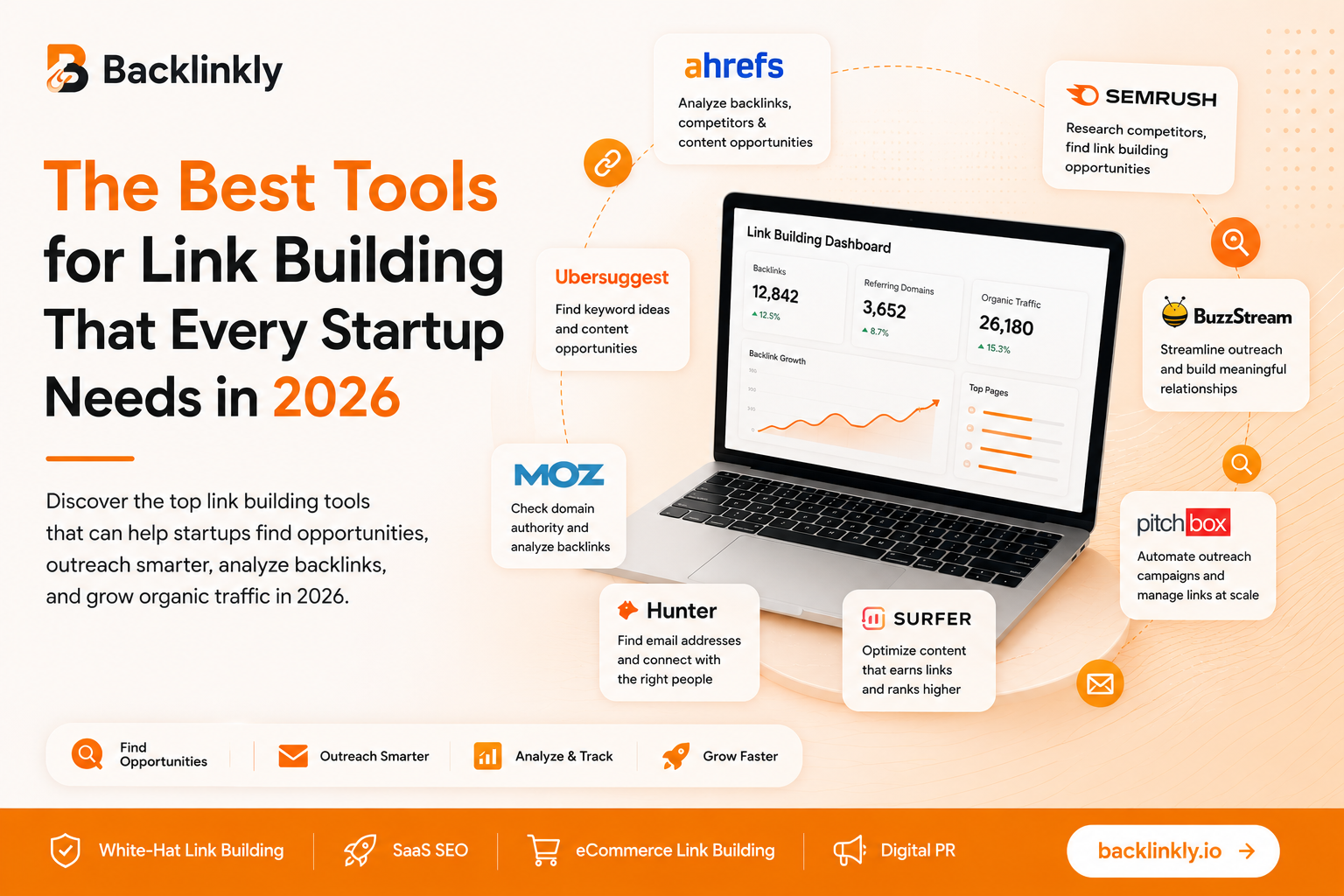
Link building is one of the highest-ROI activities in SEO, but only if you use the right tools. This post breaks down the best tools for startups looking to earn quality backlinks without burning their budget. From competitor research to outreach automation, you’ll find out exactly which tools to use, when to use them, and how to build a lean, effective link-building stack that scales.
Most startups pour money into ads and content, then wonder why their site stays buried on page four. The real problem? They’re skipping link building. And the ones who do try it often waste weeks doing it manually.
Tools for link building have changed how fast-growing companies compete online. The right stack lets a two-person team punch well above their weight. The wrong one wastes both time and money.
Here’s the truth: 94.3% of all web pages receive zero traffic from Google because they have no external backlinks. If your startup’s pages fall into that bucket, no amount of great content will save you. This guide walks you through the tools you actually need, what each one does, and how to build a lean stack that fits your stage and budget.
Why Do Startups Struggle With Link Building?
Startups don’t fail at link building because they lack ideas. They fail because they try to do it the same way enterprise teams do, without the headcount or budget to back it up.
Manual outreach takes roughly 10 to 15 hours to acquire one high-authority link. That’s time most startup founders and lean marketing teams simply don’t have. On top of that, the average cost per acquired backlink has risen 17% compared to last year, making the wrong tool choice even more expensive.
The good news? The right tools for startups cut that time down dramatically. They handle the grunt work so your team can focus on the outreach that actually closes links.
What Are Link Building Tools, and Why Do They Matter?
Link building tools are SEO software platforms that help you find websites willing to link to yours, analyze competitor backlinks, manage outreach campaigns, and monitor your link profile over time.
Without them, you’re flying blind. You’d have no reliable way to know which sites are worth pursuing, whether a domain has toxic spam signals, or if a backlink you earned last month quietly disappeared. For startups, these tools aren’t optional extras. They’re the foundation of any scalable SEO strategy.
Over 82% of SEOs rely on backlink analysis tools like Ahrefs and Semrush to guide their link-building decisions. The tools that make up a solid startup stack cover four key stages: research, contact finding, outreach, and monitoring.
Which Tools for Startups Work Best at the Research Stage?
The best link building research tools for startups are Ahrefs and Semrush. Both give you deep insight into competitor backlink profiles, help you find link gaps, and surface high-authority domains you can actually pitch to.
Ahrefs is the go-to for most SEO professionals. 59.1% of SEO experts choose Ahrefs as their top all-in-one tool, and 68.1% rate it as the most accurate backlink data provider available. Its Link Intersect feature is especially useful for startups. It shows you which sites link to your competitors but not to you, giving you a ready-made list of warm prospects.
Semrush is a strong alternative with a built-in outreach module, making it a convenient option if you want research and prospecting in one place. Its backlink database is large and well-maintained, with regular updates that catch new links fast.
For startups on a tight budget, Google Search Console is free and shows your existing backlink data. It won’t replace a paid tool, but it’s a smart starting point while you’re getting traction.
Want to know which domains are worth targeting once you’ve found them? Pair your research tool with Moz or Majestic. These platforms give you domain authority scores and trust metrics that tell you whether a site’s link is actually worth pursuing. Majestic’s Trust Flow metric is particularly useful for filtering out low-quality prospects early.
How Do You Find Contact Information for Link Outreach?
Finding the right email address is often the step that stalls startup link-building campaigns completely. Cold outreach to generic inboxes rarely gets replies. You need to reach the actual person who manages the site or blog.
Hunter.io is the most popular email finder in the space. Over 2.5 million marketers rely on Hunter.io for verified email outreach. You drop in a domain, and it pulls verified contact information automatically. It has a generous free tier that works well for early-stage startups.
Skrapp is another solid option, particularly if your prospects are B2B companies. It pulls verified contacts directly from LinkedIn profiles and company domains, saving you the time of manual research. For agencies or startups running large outreach campaigns, Skrapp’s bulk finder is a major time-saver.
What’s the Best Outreach Tool for a Lean Startup Team?
The best outreach tool for lean startup teams is Pitchbox. It combines prospecting, personalized email sequencing, follow-up automation, and pipeline tracking into a single platform, so you don’t need to juggle five different tools.
That said, Pitchbox is priced for agencies and larger teams. If your budget is tighter, Respona is an excellent alternative. It merges AI outreach with SEO analytics and helps you find journalists and high-authority blogs automatically. Respona users see up to 38% higher reply rates using AI-optimized email content, which is a significant edge when you’re doing everything manually.
One thing every startup should know: personalization drives results more than volume. Marketers who sent 1,000 templated emails saw response rates of just 1 to 2%. Those who built genuine relationships with 50 high-quality prospects saw success rates climb to 25 to 30%. Your tool choice should support quality over quantity.
For startups exploring media coverage as a link-building channel, Featured.com (the modern evolution of HARO) lets you respond to journalist queries and earn editorial backlinks from high-authority publications. It’s free and well worth using alongside your outreach stack.
How Should Startups Monitor Their Backlinks?
Backlink monitoring isn’t something to set up “later.” Links disappear, sites get penalized, and toxic backlinks can quietly drag down your domain’s authority if you’re not watching.
Ahrefs and Semrush both include backlink monitoring, so if you’re already using either for research, you likely don’t need a separate tool. Set up alerts for new backlinks acquired, lost backlinks, and competitor link gains.
For startups on a lean budget, Linkody is a free-to-start backlink tracker that provides real-time link status updates, disavow management, and clean reporting dashboards. Over 20,000 small businesses use Linkody for daily backlink tracking, making it one of the most widely adopted monitoring tools for early-stage companies.
You can also explore Backlinkly’s link monitoring features if you want a platform built specifically around link quality and acquisition workflows for growing brands.
Which Link Building Strategies Work Best With These Tools in 2026?
The tools you use are only as good as the strategies behind them. In 2026, the strategies driving the strongest results are digital PR, link insertions, guest posting, and broken link building.
Digital PR tops the list. 48.6% of SEO professionals rate it the most effective tactic, and brands using it report an average ROI of 312% from earned media campaigns. The strategy works by creating data-led content that journalists and bloggers genuinely want to reference.
Link insertions (also called niche edits) are preferred by roughly 9.4% of practitioners for their speed. You pitch your URL as a natural addition to an already-indexed, ranking page. This means the link’s host page already has authority, which passes through to you immediately.
Guest posting still works, but the bar is higher. Long-form guest posts of 1,500 or more words generate 77.2% more links than shorter pieces. Focus on topically relevant sites, not just high DA scores.
For startups building domain authority from scratch, pairing these strategies with the right link building tools for startups is the fastest path to sustainable organic growth.
Building Your Startup Link Building Stack
You don’t need 10 tools to run a solid link-building operation. Most startups are better off with a lean, focused stack that covers the four core stages without overlap.
Here’s a proven starting setup:
Research: Ahrefs (or Semrush if you want outreach built in) Contact finding: Hunter.io for most sites, Skrapp for B2B LinkedIn prospects Outreach: Respona for AI-assisted personalization, or Pitchbox at scale Monitoring: Ahrefs alerts, or Linkody for budget-conscious tracking Media pitching: Featured.com for journalist queries
As your team and budget grow, you can layer in Moz or Majestic for deeper authority scoring, and Screaming Frog for technical audits that surface broken link opportunities.
The key is starting with what you can actually execute. A focused two-tool stack used consistently will outperform an expensive suite that nobody has time to manage.
If you’re ready to stop guessing and start building links that move rankings, reach out to the Backlinkly team to talk through the right strategy for your startup.
What are the best free link building tools for startups?
The best free options for startups are Google Search Console (for monitoring existing backlinks), Hunter.io’s free tier (for email finding), and Featured.com (for media outreach). These three cover the core stages of a link-building workflow without any upfront cost. As your campaigns scale, a paid research tool like Ahrefs becomes essential.
How many backlinks does a startup need to rank on Google?
There’s no fixed number, but data shows that sites maintaining 30 to 35 high-quality backlinks generate over 10,500 organic visits per month. Quality matters far more than quantity. A handful of links from high-authority, topically relevant domains will outperform hundreds of low-quality ones. Focus on earning fewer, better links rather than chasing volume.
How long does it take to see results from link building?
Most startups begin to see measurable ranking improvements within three to six months of a consistent link-building campaign. B2B SaaS companies report an average SEO ROI of 702% with a break-even period as short as seven months. The timeline depends on your domain’s current authority, the quality of links you’re acquiring, and the competitiveness of your target keywords.
Is it worth paying for link building tools when you’re just starting out?
Yes, if you’re serious about organic growth. Manual link building without tools takes 10 to 15 hours per acquired link. A tool like Ahrefs or Respona can cut that dramatically, making the subscription cost worthwhile even for early-stage teams. Start with a single research tool and add outreach automation once you’ve validated your targeting approach.
What’s the difference between Ahrefs and Semrush for link building?
Both are excellent, but they serve slightly different workflows. Ahrefs is the most accurate backlink data provider according to 68.1% of SEO professionals and is the stronger choice for pure link research. Semrush has a broader feature set that includes a built-in outreach module, making it more convenient if you want research and campaign management in one platform. Many startups start with one and add the other as their operation matures.
Can link building tools help with AI search visibility?
Yes. 73.2% of marketers believe backlinks directly influence the chance of appearing in AI search results like ChatGPT, Perplexity, and Google AI Overviews. Tools that help you earn links from high-authority, editorially recognized domains also improve your brand’s citation profile across AI answer engines. In 2026, link building and AI visibility are increasingly the same game.
What link building strategy gives the highest ROI for startups?
Digital PR consistently delivers the strongest return. Brands using digital PR and earned media report an average ROI of 312%, and it’s rated the most effective tactic by nearly half of SEO professionals surveyed. For startups with limited budgets, pairing a digital PR approach with link insertion outreach (for speed) and guest posting (for brand authority) creates a well-rounded strategy that scales efficiently.
Related Reading
- Niche Edits vs. Guest Posts: Which Link Building Strategy Wins in 2026?
- Link Building Agency: How to Pick One That Actually Grows Your Rankings in 2026
